 By
By Jensen Huang was not originally part of Donald Trump’s China trip.
But he received a last-minute invitation, and was later seen boarding Air Force One in Alaska during a refueling stop, as he headed to Beijing.
For investors, the symbolism is hard to miss.
The world’s most valuable chipmaker is now represented at a summit that could shape trade, technology access and the next phase of US-China relations.
The change in plans also shows how central Nvidia has become to the negotiations, even as Washington and Beijing remain far apart on advanced chips.
Jensen Huang was not invited, until he was
Huang’s name was absent from the White House’s initial list of executives expected to travel with Trump, even though the delegation already included heavyweight names such as Elon Musk, Tim Cook, Boeing’s Kelly Ortberg and others.
That omission stood out because Huang had recently said that, if invited, it would be “a privilege” to represent the United States.
As per reports, Trump asked Huang at the last minute to join after media coverage highlighted his absence.
A White House spokesman said the schedule changed and it worked out for him to come.
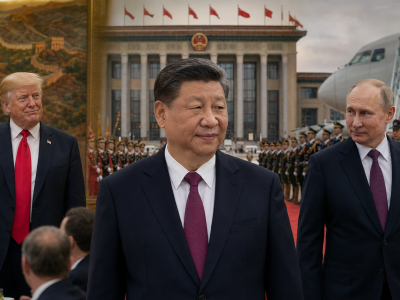
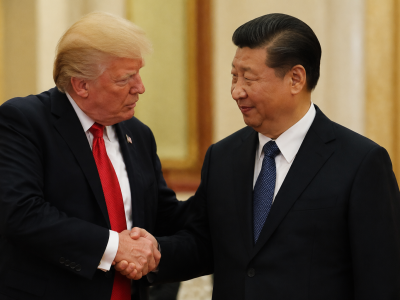
The timing matters as Trump is due to hold talks with Xi Jinping on Thursday and Friday in Beijing, and the trip is his first visit to China in nearly a decade.
The White House has framed the visit as part diplomacy, part dealmaking, with the president aiming to extend a fragile trade truce and boost US exports.
Huang’s late addition gives the delegation a sharper technology angle, especially since Nvidia has become one of the clearest examples of how trade policy now reaches directly into corporate revenue.
What Huang wants from Beijing
For Nvidia, the China question is no longer about incremental gains but about a market that has already largely shut down.
The company has spent months trying to navigate restrictions that have effectively pushed it out of advanced AI chip sales in the country, after US export curbs blocked its most capable products and eroded its earlier dominance.
Chief executive Jensen Huang has previously noted that Nvidia’s share of China’s AI chip market has fallen dramatically over recent years.
In its latest disclosures, the company has gone further, effectively describing its position in China’s data center market as closed off, with competitors stepping in to fill the gap.
Against that backdrop, recent policy adjustments around products like the H200 have had limited commercial impact so far, with shipments still constrained by approvals on both sides and regulatory uncertainty in Beijing.
Even large reported order volumes have not translated into meaningful near-term sales, given supply and clearance bottlenecks.
That makes Huang’s presence in Beijing less about unlocking an immediate revenue stream and more about positioning.
If the summit results in any easing of chip-related restrictions, it would represent a marginal reopening in a market that remains strategically important but commercially constrained.
If not, Nvidia continues to operate in a reality where US controls limit its access while China accelerates efforts to build alternative supply chains in AI computing.
The post Nvidia CEO joins Trump’s China trip after late invitation from White House appeared first on Invezz