 By
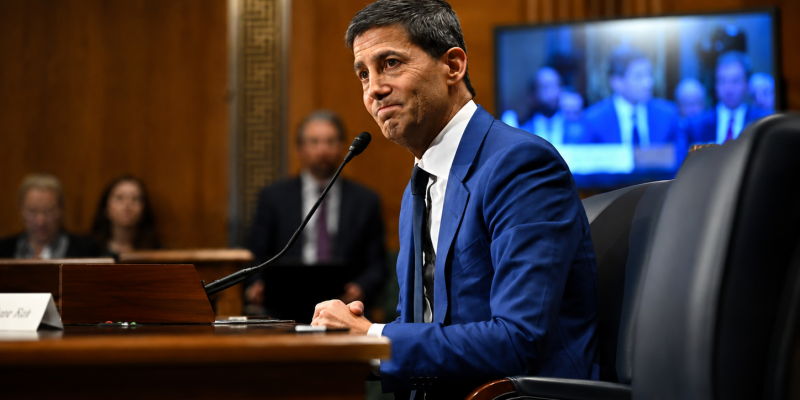
By Incoming Federal Reserve Chair Kevin Warsh could face significant challenges in reducing the US central bank’s role in financial markets as rising federal debt and weakening demand advantages for US Treasuries complicate the outlook, according to analysts and economists.
Warsh, who was confirmed by the US Senate on Wednesday to replace Jerome Powell as chair of the Federal Reserve, has long advocated for a smaller central bank footprint and less intervention in markets.
He has argued that a more restrained approach would allow the Fed to focus more effectively on controlling inflation while reducing market distortions.
However, analysts warned that implementing such an approach may expose vulnerabilities in the Treasury market and create upward pressure on long-term interest rates.
Debate over Fed balance sheet strategy
Warsh has criticised the Federal Reserve’s repeated expansion of its balance sheet during crises and periods of market stress.
He has argued that the central bank lacked clear guidelines regarding what assets should be purchased, how much should be bought, and how holdings should eventually be reduced.
The Fed’s balance sheet currently stands at around $6.7 trillion, down from a peak near $9 trillion in 2022. However, holdings have begun growing slowly again in an effort to maintain sufficient bank reserves.
Quantitative easing, the process through which the Fed purchases assets to inject liquidity into the financial system, remains a subject of debate among economists and policymakers.
Under conventional monetary policy, the Fed typically adjusts short-term interest rates to influence borrowing costs and economic activity.
But when rates approach zero during severe economic shocks, the central bank can expand its balance sheet and purchase assets to lower longer-term interest rates and stimulate growth.
Fed policymakers generally agree that such measures have some effect, though opinions differ on how the balance sheet should be managed going forward.
Mixed views among policymakers
Bill Nelson, a former Fed staffer and now chief economist at the Bank Policy Institute, recently estimated that reducing the Fed’s balance sheet by another $2 trillion could have widely varying effects on policy rates depending on how the process is handled and how the Treasury responds, as cited in a Reuters report.
A recent survey conducted by the Brookings Institution also found that most respondents did not believe the Fed’s current balance sheet size posed a threat to economic growth or financial stability.
Rising deficits add pressure
Broader fiscal conditions may further complicate Warsh’s plans.
The Congressional Budget Office estimates the federal deficit will equal 5.8% of gross domestic product in fiscal year 2026, well above the 50-year average of 3.8%.
Research from the Federal Reserve Bank of St. Louis also suggested that US Treasuries may be losing part of their traditional rate advantage.
The post Kevin Warsh’s Fed plans face debt market pressure appeared first on Invezz