 By
By Investors have cooled on European defence stocks as profit-taking and stretched valuations collide with rising uncertainty over the future of warfare.
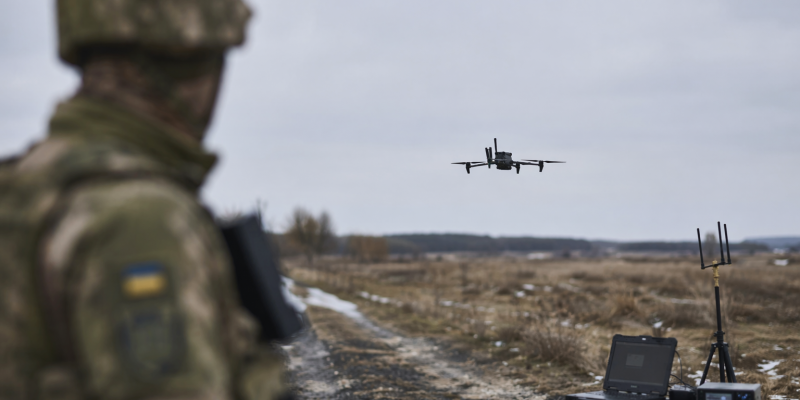
The ongoing Iran conflict has also highlighted the growing effectiveness of low-cost drones, raising questions about demand for traditional military equipment.
The MSCI Europe Aerospace and Defence Index fell 9.2% in March, marking its biggest monthly decline in five years.
The drop reflects a reversal in a sector that had delivered strong gains in recent years.
War-driven rally fails to repeat
Defence stocks typically rise at the onset of conflict.
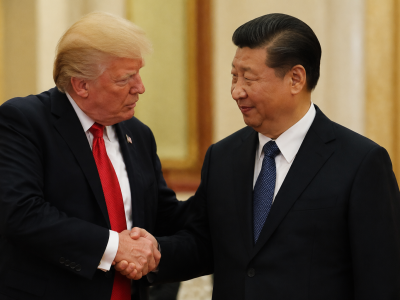
This pattern was seen after Russia’s full-scale invasion of Ukraine in 2022 and during periods when US President Donald Trump pressured NATO allies to increase military spending.
However, this trend has not held since the Iran conflict began on February 28.
This is despite repeated criticism from Trump towards NATO allies for not supporting US military action.
Shares of key European defence firms have declined sharply.
Czech arms maker CSG has fallen nearly a third since the conflict began.
Germany’s Rheinmetall and Renk are down about 10%, while Sweden’s Saab has dropped around 12%.
Strong gains give way to position unwinding
European defence stocks had been among the market’s top performers since February 2022.
The sector surged more than 450% during this period, compared to roughly 40% gains in the broader MSCI Europe index, as mentioned in a Reuters report.
The rally was driven by government commitments to increase defence spending and policy changes such as Germany loosening fiscal rules to accelerate military investment.
However, order flows have not met investor expectations.
Valuations and crowded trades weigh
At the start of the Iran conflict, Europe’s aerospace and defence index was trading at about 29 times earnings forecasts, close to record highs reached last year.
Investor positioning has also played a role.
Citigroup noted that crowded bullish trades were being unwound, which can amplify declines when sentiment shifts, as mentioned in a Reuters report.
Drone warfare reshapes expectations
The Iran conflict has underscored both the cost and intensity of modern warfare.
Gulf states have deployed hundreds of US-made Patriot interceptors, each costing around $4 million.
At the same time, the conflict has renewed focus on cheaper alternatives such as attack drones and drone interceptors.
These technologies have already gained prominence during the Ukraine war.
Some European defence companies are responding by investing in drone and counter-drone technologies.
Rheinmetall, for instance, has partnered with US-based Anduril to develop European versions of its drone systems.
Long-term outlook remains intact
Despite the recent correction, analysts maintain that the long-term outlook for the sector remains strong.
Government spending commitments continue to rise, and fund flows indicate selective buying.
Data from LSEG shows net inflows of $1.32 billion into the WisdomTree Europe Defence ETF so far in 2026.
This includes $377 million since the start of the Iran conflict.
Two smaller defence ETFs iShares Europe Defence ETF and HANetf Future of Defence ETFs have also attracted a combined $355 million this year, including $124 million since the conflict began.
The post Europe defence rally cools as drone warfare raises questions appeared first on Invezz