India’s annual retail inflation increased to 0.71% year-on-year in November, rising from a record low of 0.25% in October, according to government data released on Friday.
The figure was broadly in line with consensus polls, which had forecast inflation at 0.7%.
Despite the uptick, November marked the third consecutive month in which inflation remained below the Reserve Bank of India’s (RBI) target range of 2% to 6%.
| Category | Nov 2025 (Rural) | Nov 2025 (Urban) | Nov 2025 (Combd.) | Oct 2025 (Rural) | Oct 2025 (Urban) | Oct 2025 (Combd.) | Nov 2024 (Rural) | Nov 2024 (Urban) | Nov 2024 (Combd.) |
| CPI (General) | 0.10 | 1.40 | 0.71 | -0.25 | 0.88 | 0.25 | 5.95 | 4.89 | 5.48 |
| CFPI | -4.05 | -3.60 | -3.91 | -4.85 | -5.18 | -5.02 | 9.10 | 8.74 | 9.04 |
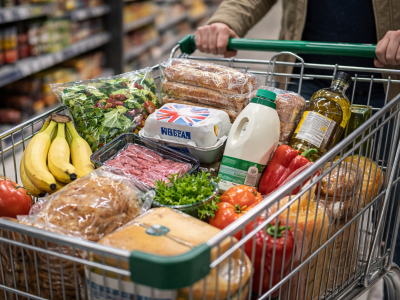
The latest reading reflects a slowdown in the rate at which food prices have been declining.
Food inflation, as measured by the Consumer Food Price Index (CFPI), came in at -3.91% year-on-year in November, compared with -5.02% in October.
The government noted that an increase of 111 basis points was observed in food inflation between the two months.
Food and fuel categories drive the monthly increase
The government attributed the rise in both headline and food inflation primarily to higher prices in vegetables, eggs, meat and fish, spices, and fuel and light.
Vegetable prices, while still sharply lower than a year earlier, fell 22.20% in November compared with a steeper 27.57% decline in October.
Rural inflation also rose during the month. Headline rural inflation stood at 0.10% in November, up from -0.25% in October.
Rural food inflation eased to -4.05% from -4.85% the previous month.
Urban inflation recorded a sharper shift. Headline inflation increased from 0.88% in October to 1.40% in November, while urban food inflation moved from -5.18% to -3.60% over the same period.
Macroeconomic backdrop supports easing cycle
The latest inflation print comes shortly after the RBI cut its policy rate by 25 basis points earlier this month, bringing the total reduction for 2025 to 125 basis points.
The central bank cited a combination of “strong economic growth and moderate inflation” in framing its policy outlook, with Governor Sanjay Malhotra characterising the current conditions as a “rare goldilocks” phase for the Indian economy.
The RBI has lowered its inflation projection for the fiscal year ending March 2026 to 2% from the previous estimate of 2.6%.
It also expects growth to remain robust, raising its full-year GDP forecast to 7.3% from 6.8% earlier.
Government confidence boosted by strong GDP data
India’s 8.2% GDP expansion in the July–September quarter has prompted the government to raise its own outlook, now expecting growth of 7% or more compared with an earlier projection of 6.3% to 6.8%.
Officials have pointed to the impact of Prime Minister Narendra Modi’s policies, including consumer tax cuts and labour reforms, which they believe will help cushion the economy from external pressures such as US tariffs.
The inflation trajectory in the coming months will remain a key determinant for the central bank’s future policy decisions, particularly as food prices continue to show large swings driven by supply conditions.
The post India’s retail inflation rises to 0.71% in November as food deflation eases appeared first on Invezz